
Collaborators
Mentors

Title of the study: Constructing Inclusive Education in the Indian Context: Listening to Voices on the Ground
| High Income School | DPS, Bangalore |
| Middle Income School | Udayachal |
| Government Low-Income School | Muktangan School |
- First ever study in India where we’re looking at inclusion from the ground up.
- We are conducting observations, interviewing leaders, conducting focus groups with teachers, support staff, paraprofessionals; interviewing parents, and interviewing students, both with disabilities and without.
- Looking to create a framework for how this works in our context.
- Looking to capture the innovation on the ground.
University of Florida Collaboration
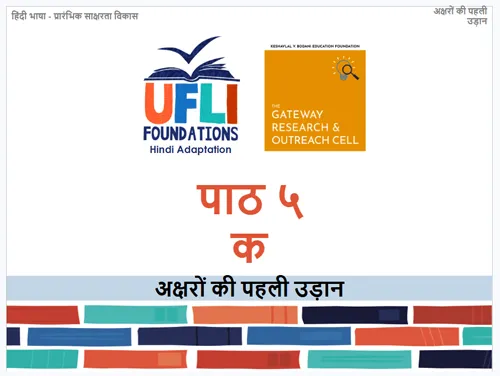
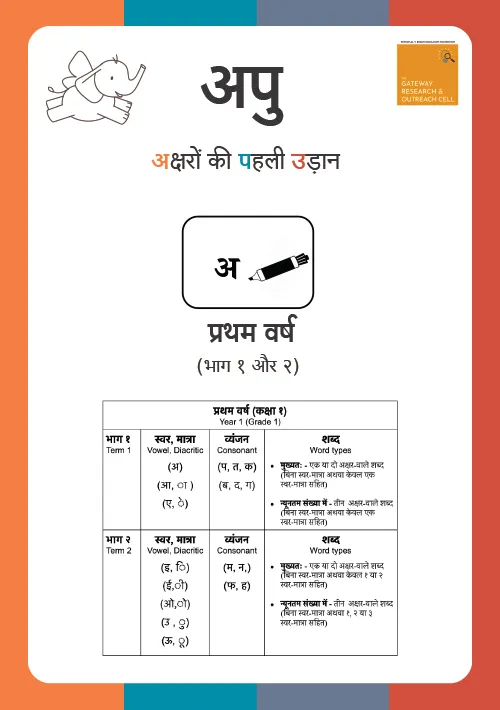
अक्षरों की पहली उड़ान (APU) – A Research-based Foundational Literacy Program
(UFLI Foundations Hindi language adaption)
‘अक्षरों की पहली उड़ान” i.e. ‘Aksharon ki Pehli Udaan (APU)’ [‘First Flight of Letters’] is a foundational literacy program designed for teaching reading in the Hindi language. The APU program is being developed under a research-collaboration between Keshavlal V. Bodani Education Foundation and the University of Florida Literacy Institute (UFLI). It is a multicomponent reading program based on key instructional methods derived from the latest research in Hindi literacy, aimed at teaching proficient (fluent and meaningful) reading. The APU program adopts universal design principles for core Hindi reading education at primary grades and specifically supports intervention for students who are struggling to read. The program is built to accelerate reading skills and bridge delay or reading gaps, especially for students with learning challenges and disabilities.
*All APU learning materials will be freely available for anyone to use, adapt, and share (with attribution), but no one is permitted to sell either the UFLI Foundations or Hindi adaptation materials, any adaptation of them, or any part of them. This work may not be used by anyone for commercial purposes. These materials are to be used for non-commercial educational purposes only.
The pedagogical design of the APU program integrates the latest findings from neuroscience studies on Hindi reading development as well as best practices in special and inclusive education. Drawing from recent foundational literacy studies in Devanagari script and other akshar-based Indian languages, the program introduces reading of leveled connected-text (decodable with grade-controlled word types), purposefully using vocabulary and context from familiar usage and lived experience of Hindi speaking children. Parallely, the program explicitly teaches the Hindi alpha-syllabary including स्वर, व्यंजन और संयुक्ताक्षर – svar, vyanjan & samyuktakshar [vowels, consonants and conjunct consonants] in gradual stages from pre-akshar, up to consolidated word reading. The curriculum is organised with an explicit and systematic phonics-based structure using the research-based वर्ण समूह – ‘Varna-samooh’ [alpha-syllable cluster] principle. The APU program lesson scope and sequence has also been intentionally developed to follow an inclusive design. It is the first Hindi phonemic sequence (Working Manuscript) created to specifically incorporate the phonological development sequence studied in typically Hindi-speaking children. This sequence further supports students with specific learning disabilities as well as audiological processing/ speech deficits or delays.
The following components (learning resources) will be available in the APU program:
Scope & Sequence, Instructional Guide & Training Manual for teachers
Student workbooks for each alpha-syllable cluster
Year-wise Teacher Book with explicit lesson script (for use in offline classroom/ black-board teaching – sample working design)*
Lesson Slides with explicit lesson script (for use in digital classroom/ online teaching – sample working design)*
Classroom review games, resources, anchor charts
Placement test, Progress monitoring tests (Spelling), Cluster-wise proficiency tests
Year-wise multi-component comprehension lessons
*Gateway is currently collaborating with field partner, Aseema Charitable Trust to pilot the program at a municipal school adopted by the NGO. Expert review of the pilot implementation and practitioners’ input will be used to inform the design-based development of the lessons.
As India strives towards achieving basic literacy by Grade 3 under the national initiative of ‘NIPUN Bharat’, special emphasis has been placed on primary curriculum reform and foundational literacy (Ministry of Education, 2021). The APU program is not only a vital supplement to comprehensive literacy education, it directly addresses the following competencies defined under the Curricular Goal (CG-10) in the domain of ‘Language and Literacy Development’ for the Foundational Stage (Pre-draft National Curriculum Framework for School Education, 2023):
CG-10 Children develop fluency in reading and writing in Language 1:
C-48: Develops phonological awareness and blends phonemes/syllables into words and segments words into phonemes/syllables.
C-50: Recognises all the letters of the alphabet (forms of akshara) of the script and uses this knowledge to read and write words.
C-51: Reads stories and passages with accuracy and fluency, using appropriate pauses and voice modulation.
C-52: Reads short stories independently and comprehends their meaning by identifying characters, storyline and the author’s intention (L1).
Adoption of the APU program aims to complement balanced Hindi literacy instruction and further, advance towards bridging the existing disparity and gaps in Hindi literacy using targeted and research-based instruction, thus enabling schools to achieve the goals of the National Education Policy.